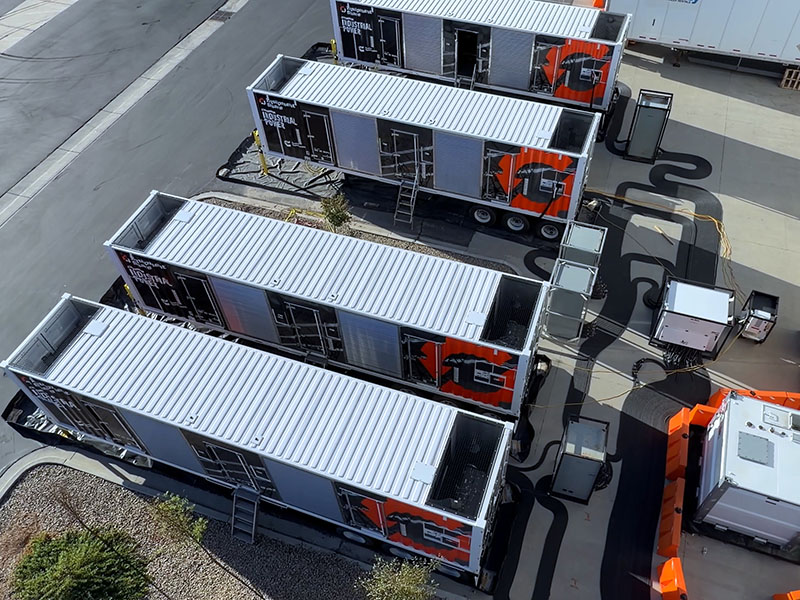
When plugging in is not an option, generators supply the power. They keep off-the-grid construction sites humming, help events run smoothly and provide protection for critical operations when power is lost.
Demand for temporary power has never been greater. That increases the need for a partner with the equipment and expertise to deliver the smartest, most cost-effective solutions. EquipmentShare created the Energy Solutions division to address this need. With a massive fleet of modern generators and a nationwide network of power experts, EquipmentShare can set you up for success.
“Our focus is on delivering the right power solution for each application, helping customers operate efficiently and meet the demands of an evolving industry,” EquipmentShare National Technical Support Specialist for Power Generation Richard Miller said.
What follows is a guide that covers the basics of rental generators for construction, commercial and industrial uses.
Who needs temporary power?
Businesses and government agencies often need temporary power for construction, planned maintenance, unexpected outages, unavailable or insufficient power from regional utilities, seasonal demand and natural disasters. Whether prime or standby power, EquipmentShare serves the full spectrum of industries, including:
- Data centers.
- Building services and construction.
- Petrochemical and refining.
- Industrial and manufacturing.
- Event production.
- Health care.
Generator sizes
A generator’s size is determined by the energy it produces, measured in kilowatts (kW). Here is a breakdown of commercial and industrial generator sizes with common uses:
Small (Up to 100 kW): Jobsite tool charging and usage; powering stand-alone office trailers or bathroom trailers.
Medium (100-500 kW): Powering multiple jobsite trailers; industrial and manufacturing plant equipment testing, turnarounds and retrofits; powering multiple tents for events, such as the 2026 Formula 1 Heineken Las Vegas Grand Prix; providing backup power for retail stores; operating tower cranes.
Large (More than 500 kW): Testing and commissioning equipment at data centers and other large facilities; providing bridge power while facilities wait for connection to the grid; disaster recovery; standby power for planned and unplanned maintenance.
Generator fuels
Natural gas: Natural gas is less expensive than diesel fuel and burns cleaner. Unlike diesel generators, natural gas generators can operate at low loads for extended periods without developing exhaust system problems. Traditionally, natural gas has only been an option for jobsites with access to a pipeline, but in some cases EquipmentShare can deliver liquified natural gas (LNG) or compressed natural gas (CNG) to jobsites without pipeline access.
Diesel: Diesel generators can dependably handle large electrical loads to provide continuous power for long periods. Diesel fuel can be stored on-site, making it a convenient option. EquipmentShare’s Tier 4 Final diesel generators meet America’s strictest emission standards for diesel engines. For jobs in which loads vary significantly throughout the day, diesel generators can be paired with battery energy storage systems (BESS), so the generator only runs during peak hours and BESS provides the power for the rest of the day.
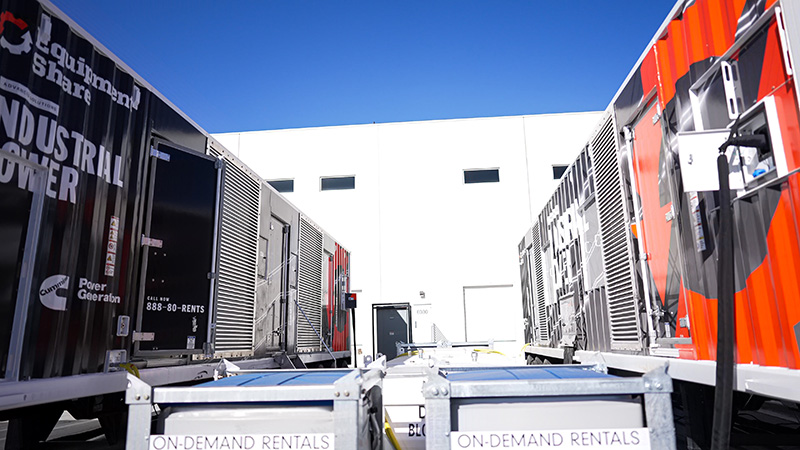
The right system for the job
Determining the best temporary power system for a job starts with a load assessment. It includes adding up the running watts and starting watts of each piece of equipment that will require power. The kW rating of the generator — or generators — must exceed the combined kW of all the equipment that could be running simultaneously.
Other factors to consider include the voltage and phase requirements of your equipment, access to natural gas pipelines, site layout and environmental conditions of the jobsite. If the equipment being powered is critical and downtime is not an option, backup generators will be needed as a precaution in case prime generators go down temporarily.
EquipmentShare’s power experts can assess your needs and recommend the best temporary power setup for your job.
EquipmentShare advantages
Many vendors rent generators, but EquipmentShare offers distinct advantages.
Expertise: With more than 400 locations nationwide, EquipmentShare has teams of experts across the United States who can engineer, install and maintain complex temporary power systems.
“We really go in and understand everything you need so we can best support your project,” Miller said. “There’s a big difference between being an order-taker and a consultant. We want to understand what your goal is and why you need this temporary power and then provide you with the best solution. We can provide a turnkey service up to the point of termination and can even provide a certified electrician upon request. That includes the distribution equipment like I-line panels, cable and disconnects. That includes the fluid solutions — the diesel, the DEF, the natural gas, whatever it is on that site.”
Equipment variety: EquipmentShare’s power generation fleet is big, varied and modern. That allows EquipmentShare to match the right generator to the job.
EquipmentShare has responded to the nationwide surge in demand for temporary power by reaching a multiyear fleet agreement with Cummins, a global leader in power generation equipment. The partnership will help EquipmentShare substantially increase its supply of generators to continue to meet the needs of our customers.
T3® technology: EquipmentShare’s generators are equipped with T3, the platform that allows you to remotely monitor your equipment from your phone or laptop.
“Being able to monitor the utilization of units they have on-site is important,” Miller said. “If you’re running a 200 kW gen and you’re only ever pulling 75 kW on that generator, we can talk about getting you a different size gen because you’re overpaying. If a generator runs low on fuel, we get a T3 alert and can call the customer to make sure fuel is lined up. It also helps with preliminary troubleshooting for a tech. If a generator goes down, a tech can look at the alarm log and start to diagnose the problem before they’re on-site to minimize downtime.”
— Learn more about EquipmentShare’s Energy Solutions.